




We can all agree that we don't need any more plastic on our planet. That's why more and more people are switching from conventional plastic toothbrushes to bamboo toothbrushes. But how sustainable are bamboo toothbrushes really? We asked two founders our questions. Kira from BambuDent and Anton from Planet Bamboo answered our questions about raw materials, the manufacturing process, and production conditions, and explained why bamboo toothbrushes from China are indeed a sustainable alternative.
PART 1: THE RAW MATERIAL BAMBOO & PRODUCTION IN CHINA
1. Why use bamboo as the main component of a toothbrush?
Anton from Planet Bamboo: You simply have to love bamboo. It combines pretty much all the properties our modern environment needs in a single material. Giant bamboo, for example, reaches its maximum length of 20 meters within just a few months. It then takes about 4-5 years for the culm to develop its excellent hardwood-like properties. Because bamboo grows extremely fast, large quantities can be harvested annually without endangering the stock in the slightest. In contrast, hardwood often only reaches maturity after 50-100 years. This rapid growth also means that bamboo can convert a much larger amount of CO2 into oxygen compared to trees. Since bamboo is such a resilient "weed," it doesn't need pesticides or fertilizers to grow.
Bamboo therefore has two main advantages :
- Bamboo is a very rapidly renewable resource and therefore, by definition, sustainable. Petroleum, from which most plastics are made, is a finite resource. Therefore, we should not use more of it than we actually need.
- Bamboo is biodegradable, while plastic remains on our planet for 500 years. With the mountains of waste we produce, we need to change something.
2. How sustainable is it to produce bamboo toothbrushes in China and transport them to Germany?
Kira from BambuDent: There are several reasons not to have the brushes produced in Germany.
China is no longer the cheap country it once was. There are businesspeople there who have their own ideas and enforce them just as effectively as the Germans.
The bamboo itself grows in China. There, it grows so quickly and so tall without any fertilizer that you can actually watch it grow – depending on the variety, it can grow up to 1 meter in 24 hours. This would not be possible in Europe without fertilizer, which would then be found in the final product.
- Transporting bamboo tubes would take up an enormous amount of space, because the tubes are hollow inside.
- The quality
- The price
Anton from Planet Bamboo: Realistically, a bamboo toothbrush doesn't compete with a plastic toothbrush from Europe. Virtually all our toothbrushes or toothbrush heads are produced in the Far East and therefore travel the same route. The long transport distance is certainly not ideal. But CO2 is also produced during the manufacturing of plastic. Through photosynthesis, bamboo, on the other hand, converts CO2 into oxygen. Then the difference isn't so significant anymore.
3. Production conditions in China
Kira from BambuDent: As already mentioned, China is not the cheap country it's often portrayed as in the media. The small and medium-sized companies, including our production company, offer their workers very good working conditions. These companies regularly offer tours so people can see for themselves. The companies where workers are treated poorly are the production facilities of the really big brands – I won't name any, but everyone knows which brands I mean.
Anton from Planet Bamboo: A large portion of the bamboo sold in Europe comes from China. Environmental and social standards there are naturally lower compared to the Western world. However, the positive aspect is that bamboo cultivation has so far been only minimally industrialized and is largely in the hands of small farmers.
PART 2: THE BAMBOO TOOTHBRUSH & ITS COMPONENTS
4. Why should I switch to a bamboo toothbrush at all?
Kira from BambuDent: When using a toothbrush daily, you typically rub the plastic against your mucous membranes for three minutes. This releases small plastic particles that then enter the bloodstream. The documentary also shows this. Unfortunately, we can't yet say for sure how much plastic is in our bodies and what the consequences are. But what we can say for certain is that it's not healthy.
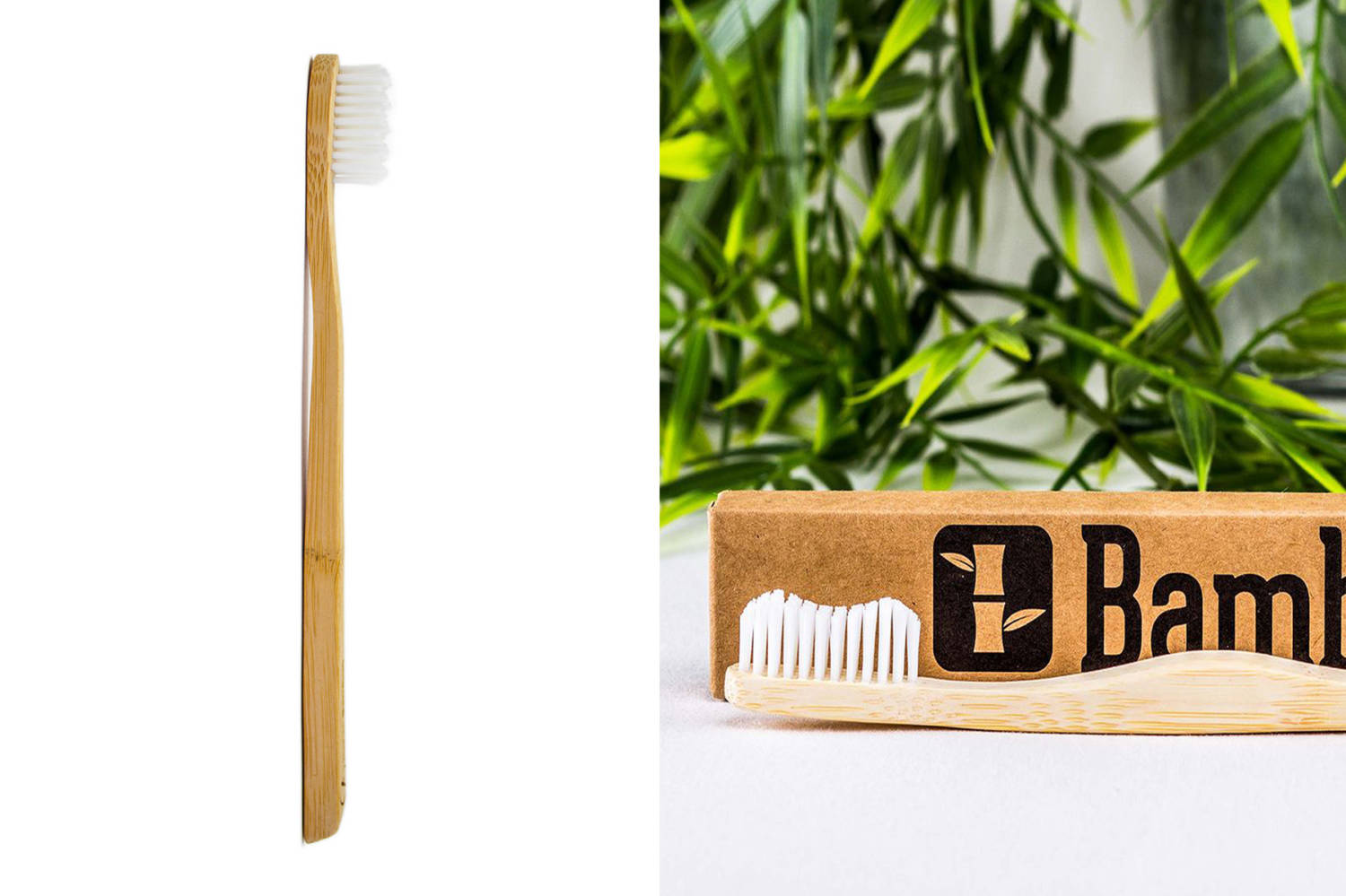
A toothbrush is typically used for about two to three months. Then it's thrown away to replace it with a new one. This creates a lot of plastic waste, firstly from the packaging and secondly from the brush itself. Our bamboo toothbrushes are packaged in a recycled cardboard box. The brushes themselves can also be easily recycled.
5. Bristles of the bamboo toothbrush: Differences
Kira from BambuDent: That's right, there are different types of bristles. Currently, one can distinguish between...
- Bristles made of bioplastic (Nylon-4) or "normal" plastic (Nylon)
- Bristles made of bamboo viscose
Bristles made of bamboo viscose:
Bamboo viscose bristles are made from bamboo pulp. They are biodegradable – and relatively quickly compared to bioplastics. However, the stiffness can only be adjusted by the bristle density.
Bristles made of bioplastic (Nylon-4) or "normal" plastic (Nylon):
Bristles made from bioplastic can be easily adjusted in stiffness. They are biodegradable – but very slowly. Bristles made from "normal" plastic (nylon) are not biodegradable.
6. Disposal of the bamboo toothbrush & service life
Kira from BambuDent: For hygiene reasons, I recommend changing your toothbrush every 3 months. If you've been sick in between, you should boil the brush or scald it with boiling water. Depending on the model, the brush can be burned, buried, or composted. While the bristles made of bioplastic are biodegradable, they take a very long time to decompose. Therefore, it's best to dispose of the head separately. Break it off and put it in the regular trash. Then, it's best to burn the handle. This bamboo toothbrush with bamboo viscose bristles can actually be composted or burned completely.*
*To be on the safe side, you should break off the head and dispose of it separately.
7. Is there such a thing as a 100% compostable bamboo toothbrush?
Kira from BambuDent: 100% compostability is very difficult. Chemicals are always used in the production of the bristles. In my opinion, this can never be avoided. These chemicals will always be present in the product. Therefore, there will also be a small amount of plastic. This plastic is biodegradable – but how long does it take? Yes, you can throw the brush in the organic waste bin. No, the waste management company won't be happy about that. Only things that decompose quickly should go in the organic waste bin. And this brush doesn't. It would be bad if it decomposed while you were brushing your teeth.
CONCLUSION: Bamboo toothbrushes are certainly not THE panacea for the plastic problem. However, they are a step in the right direction, and bamboo is already being cultivated in Europe (albeit very rarely). Therefore, it is definitely a product with great potential.
Want to try a bamboo toothbrush? Then click here to see the imperfect bamboo toothbrushes in our shop.
Information about the interview partners BambuDent and Planet Bamboo*
Kira on the founding of BambuDent:
BambuDent was founded in 2015 after a movie night. We watched the well-known film "Plastic Planet" and decided, "Things can't go on like this." So we thought about how we could contribute to the current change. It quickly seemed logical to start with the little things. And what small item do we use twice a day? The toothbrush.
Anton on the vision of Planet Bamboo:
We want to reach more people with our products. Our vision is that in the future, plastics will only be used where they are truly necessary. And we want to make this transition as pleasant as possible for consumers. Through a wide range of sustainable, yet aesthetically pleasing products, we aim to reach even those who haven't previously given much thought to the environment with our message. Ecological thinking and action should become mainstream. Sustainable companies should become mainstream. In this brave new world, we will position ourselves as a fair company that simply sells mainstream products.
*The interviews were conducted separately on different days.



























Leave a comment
This site is protected by hCaptcha and the hCaptcha Privacy Policy and Terms of Service apply.