








We are frequently asked why our products are still relatively expensive despite some imperfections. In this blog post, we'd like to explain how we determine our prices and what's important to us. We'll also answer the question of whether imperfect always has to mean super cheap.
Generally, an online shop must consider several factors when setting its pricing policy. Prices must be structured so that, after deducting the purchase price, shipping costs, and fixed expenses, a profit remains. At the same time, the price must remain attractive to customers, as this is often one of the most important purchasing criteria. There are various strategies for finding the perfect selling price. For example, it is helpful to determine the added value that each product offers customers. This helps avoid excessively high, off-putting prices, while also ensuring that products are not sold below their value.
For online shops, low purchase prices and production costs are naturally very attractive. Since many manufacturers now depend on their products being sold by large online shops and on popular marketplaces, retailers strive for particularly low prices. There are even allegations that retailers are blocked in certain shops due to supposedly excessive prices*. As a result, retailers often have little control over their own pricing and are forced to sell their products to resellers at prices that are barely profitable for them. A now common pricing practice is so-called dynamic pricing**. This involves displaying different prices for the same product depending on the time of day, the customer's device, their purchase history, and other available customer data. This generally intensifies the desire to always get the cheapest offer. As a result, the origin and the actual value of the product are often forgotten.
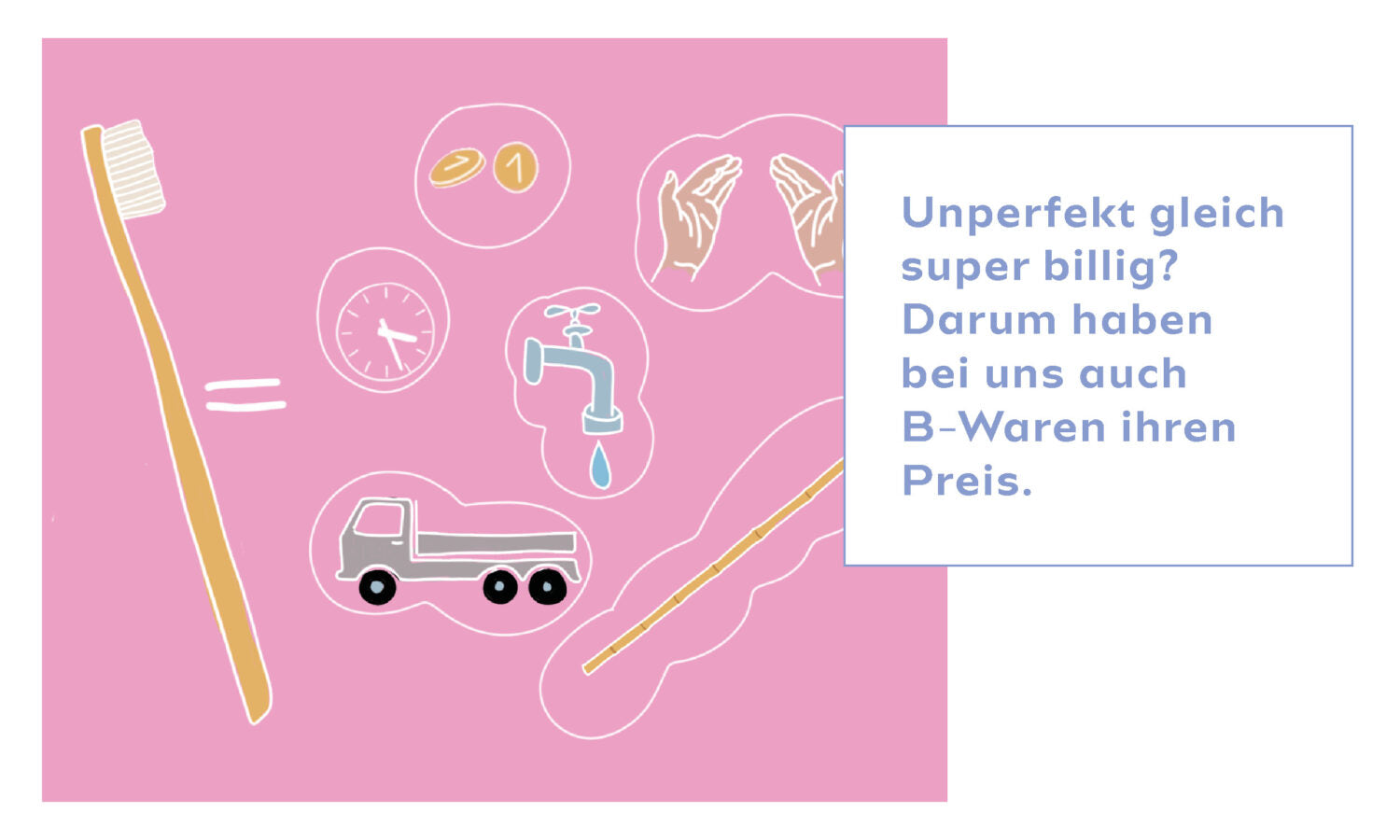
First things first: We don't receive our products for free; we buy them from our partners. We place great importance on a fair deal for both parties. To better illustrate the process, we've created a concrete example here:
Here you can see a breakdown of how the price of our bamboo toothbrush is determined and how much we earn from it.
Our goal is not to sell off as many products as cheaply as possible. We want to raise awareness that even B-grade goods and products with minor "flaws" deserve a second chance and can still serve their purpose.
You can probably see where we're going with this. Every product has a certain value that isn't solely comprised of the product itself. Many other factors contribute to its worth. This value is ultimately reflected in the price. It's easy to forget this. But it's crucial that we consciously remind ourselves of the inherent value of each individual product when buying it and using it daily. Only then is sustainable consumption possible.
So much is thrown away every day in the world. We don't want to contribute to that. In the long run, isn't it more sensible to consciously choose high-quality products that bring lasting enjoyment? And isn't it even better if their production doesn't harm our environment and even seemingly imperfect items still find a use? :)
*Tagesschau. (2020, August 17). Possible abuse of power: Federal Cartel Office investigates allegations against Amazon.
**Lamprecht, S. (2019, January 24). Dynamic Pricing - How to master the wonder weapon without risk.
Pricing as a reseller
Generally, an online shop must consider several factors when setting its pricing policy. Prices must be structured so that, after deducting the purchase price, shipping costs, and fixed expenses, a profit remains. At the same time, the price must remain attractive to customers, as this is often one of the most important purchasing criteria. There are various strategies for finding the perfect selling price. For example, it is helpful to determine the added value that each product offers customers. This helps avoid excessively high, off-putting prices, while also ensuring that products are not sold below their value.
For online shops, low purchase prices and production costs are naturally very attractive. Since many manufacturers now depend on their products being sold by large online shops and on popular marketplaces, retailers strive for particularly low prices. There are even allegations that retailers are blocked in certain shops due to supposedly excessive prices*. As a result, retailers often have little control over their own pricing and are forced to sell their products to resellers at prices that are barely profitable for them. A now common pricing practice is so-called dynamic pricing**. This involves displaying different prices for the same product depending on the time of day, the customer's device, their purchase history, and other available customer data. This generally intensifies the desire to always get the cheapest offer. As a result, the origin and the actual value of the product are often forgotten.
Our pricing for sustainable B-grade and seasonal goods
First things first: We don't receive our products for free; we buy them from our partners. We place great importance on a fair deal for both parties. To better illustrate the process, we've created a concrete example here:
Here you can see a breakdown of how the price of our bamboo toothbrush is determined and how much we earn from it.
Value and quality - not for the trash can
On the manufacturer's side, production costs and resources used are the same for perfect and imperfect products. Especially with sustainable products, particularly high-quality materials are used, employees are treated fairly, and the easiest, cheapest route isn't taken during production. And that's exactly what we want to support. That's why we set high standards when selecting our products and partners. Sustainable and fair production usually involves a great deal of effort, carefully selected materials, craftsmanship, elaborate processing, and an innovative concept. What we definitely don't support is mass production, unfair working conditions, and the irresponsible use of resources.Our goal is not to sell off as many products as cheaply as possible. We want to raise awareness that even B-grade goods and products with minor "flaws" deserve a second chance and can still serve their purpose.
You can probably see where we're going with this. Every product has a certain value that isn't solely comprised of the product itself. Many other factors contribute to its worth. This value is ultimately reflected in the price. It's easy to forget this. But it's crucial that we consciously remind ourselves of the inherent value of each individual product when buying it and using it daily. Only then is sustainable consumption possible.
So much is thrown away every day in the world. We don't want to contribute to that. In the long run, isn't it more sensible to consciously choose high-quality products that bring lasting enjoyment? And isn't it even better if their production doesn't harm our environment and even seemingly imperfect items still find a use? :)
Sources:
*Tagesschau. (2020, August 17). Possible abuse of power: Federal Cartel Office investigates allegations against Amazon.
tagesschau.de. https://www.tagesschau.de/wirtschaft/amazon-kartellamt-vorwuerfe-101.html
**Lamprecht, S. (2019, January 24). Dynamic Pricing - How to master the wonder weapon without risk.
etailment.de . https://etailment.de/news/stories/Dynamic-Pricing--Wunderwaffe-risiko-4220































































Leave a comment
This site is protected by hCaptcha and the hCaptcha Privacy Policy and Terms of Service apply.