

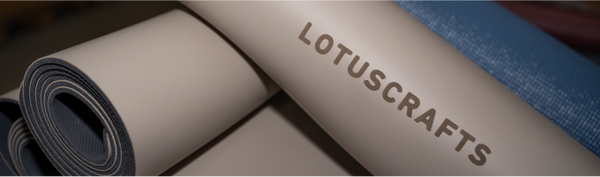


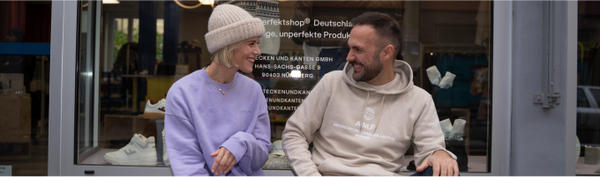

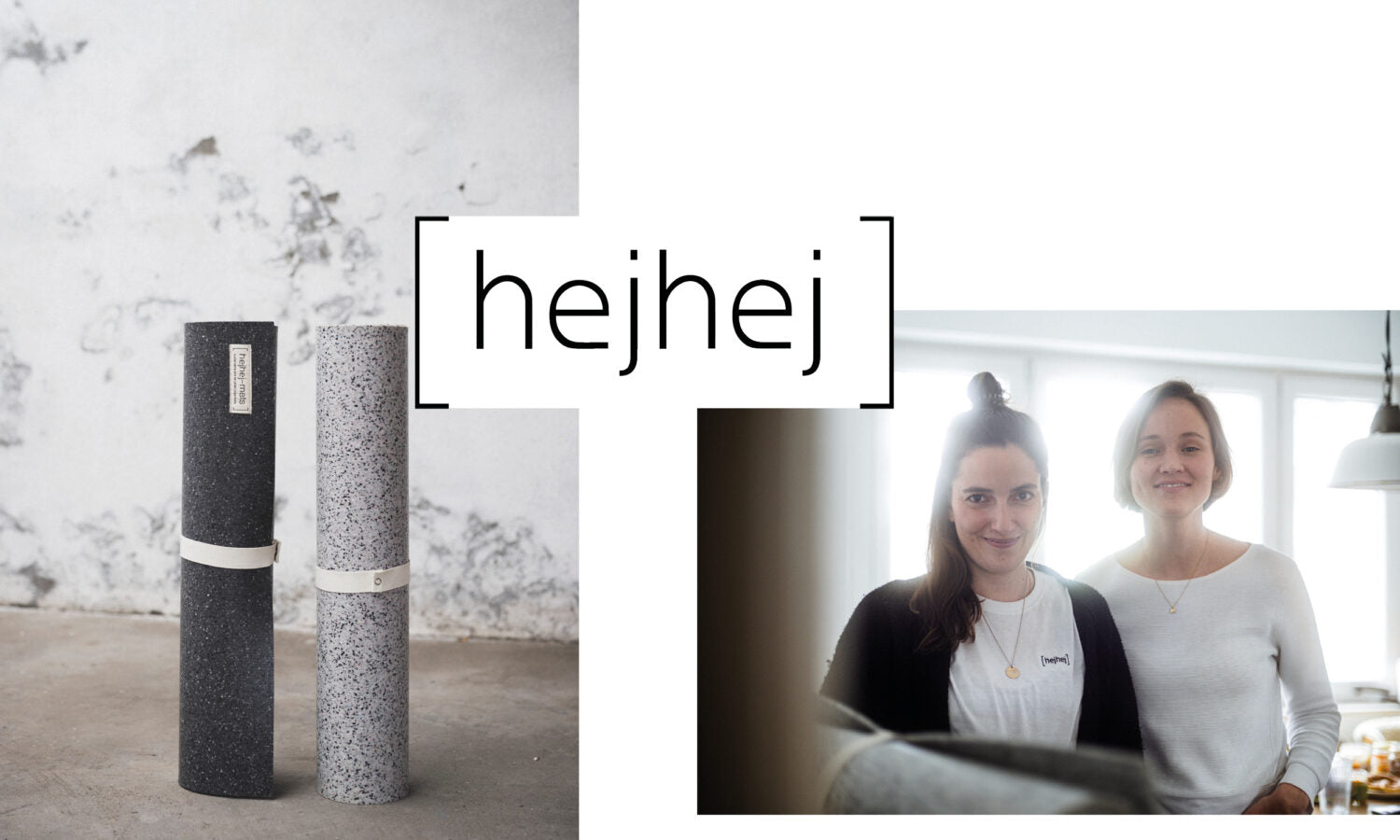
Shouldn't sustainability and yoga naturally go hand in hand? Often, however, the accessories used, such as mats, bags, and other equipment, are overlooked, and these are frequently produced in ways that are anything but sustainable or fair. Anna and Sophie, the founders of hejhej-mats, addressed this very issue and implemented their vision of holistic, sustainable yoga in the form of yoga mats, bags, and other accessories, thus creating the first closed-loop yoga brand . We asked them what exactly that means and what makes their products so special, sustainable, and fair.
For those who don't yet know hejhej-mats, can you tell us how you came up with the idea and how your company was founded?
We had the idea for hejhej during our master's studies in Sweden. We were studying sustainability management there and visited an art exhibition about global warming in Gothenburg. The Turkish artist Pinar Yoldas had a piece of art that criticized yogis, as many believe they live quite sustainable lives yet still practice yoga on harmful and cheap yoga mats. Anna and I felt completely exposed, because we too were very involved with the topic of sustainability and try to live as sustainably as possible. Up until that point, however, we had never given any thought to our yoga mats. Ours was also a very, very cheap PVC yoga mat. We wanted to change that and give all yogis the opportunity to practice on a completely sustainable yoga mat. That's how the idea for hejhej and the first closed-loop yoga mat was born. What does closed-loop mean?
How and where are your products made?
It was very important to us to keep production here in Germany. The vast majority of mats are manufactured in Asia. We produce our hejhej mats about 1.5 hours from our base in Nuremberg, allowing us to be involved in every production run. Afterwards, the logos are sewn on in our partner workshop for people with disabilities, and the mats are then packaged and shipped.What are your sustainability criteria? What was particularly important to you when you founded your company?
Every decision we make is carefully considered from a sustainability perspective. We strive to make them as sustainable as possible, always considering both ecological and social criteria. For example, ecological criteria are often particularly important when selecting materials. We try to use as many recycled materials as possible. In other decisions, social aspects take precedence. When we were considering where to have our labels sewn onto the mats, we initially thought of traditional sewing workshops. However, after revisiting this decision, we quickly realized that we also wanted to create additional social benefits. This led us to consider social workshops.
How does your recycling system work?
Our hejhej mats are 100% recyclable. We communicate this from the very beginning so that everyone who buys a hejhej mat is aware of it. When the mat eventually reaches the end of its product life cycle, our customers receive a free shipping label to send the mat back to us. As a small incentive, they receive a 15% discount voucher for their next order in our online shop. We then collect the mats and, once we have a sufficient quantity, we can recycle them and use the materials for new mat production.Is it conceivable that the closed-loop principle could replace conventional, linear production and consumption?
For us, closed-loop products are the most sustainable way to consume, and therefore we hope that the circular economy will replace the current linear economy. An interim step is currently the recycling economy, where products are manufactured from recycled materials, for example. That's certainly a great start, but it's by no means sufficient. At the end of its life cycle, the product is not recyclable and ends up in the trash. We believe that the end of the product life cycle is extremely crucial, and a product is only truly sustainable when there is a way to reuse it at the end.
Do you support any other social projects besides Lebenshilfe?
We collaborate with various social workshops. Among them is Lebenshilfe Nürnberg here in Nuremberg, which sews the labels onto the mats for us and takes care of packaging and shipping. Other workshops also sew our yoga bags and yoga straps, which are entirely handcrafted with care and love. Furthermore, we've decided to donate a portion of the proceeds from every product sold. We don't just want to sell products, but also use this opportunity to create social value. For every hejhej-bag or hejhej-strap sold, a tree is planted. For every hejhej-mat sold, we donate €1 to the NGO EarthChild Project. This organization provides environmental education and yoga to children in the townships of South Africa. Anna has visited the NGO, and their work is extremely close to our hearts. Therefore, we use every other opportunity we have to raise additional funds. For example, we are currently donating the difference from the VAT reduction to the NGO, and we recently ran a small Instagram campaign that also raised funds. Especially now during the coronavirus pandemic, the children there need support. We have also carried out social projects in the past, donating yoga mats – to social workshops but also often to homeless shelters.You can also find imperfect products from hejhej-mats in our shop from time to time.
























Leave a comment
This site is protected by hCaptcha and the hCaptcha Privacy Policy and Terms of Service apply.